


How to Overcome Fear of Speaking in Job Interviews?

Feeling tongue-tied in interviews is normal. To overcome the fear of speaking in job interviews, prepare short story answers with a structure like STAR, practice aloud with a timer, use a one minute breathing routine to calm your body, open with a scripted introduction, and run a couple of mock interviews with feedback. With consistent practice and support, your anxiety turns into clear, confident communication. Career Guidance
- Key takeaway 1: A repeatable plan beats motivation. Script, practise, feedback, repeat.
- Key takeaway 2: Use STAR, keep answers to 60 to 90 seconds, then stop.
- Key takeaway 3: Calm the body first, the mind follows, breathe, pause, then speak.
- Key takeaway 4: Get help if you need it, self practice is good, professional coaching accelerates.
Why do I freeze during interviews even when I know my stuff?
Your nervous system drives this, not your intelligence. Fear of judgment, uncertainty about what to say, and time pressure kick in, which pushes you into fight or flight. That can cause blanking, rambling, or speaking too fast.
Typical triggers include lack of story preparation, language or accent worries, surprise questions, and virtual interview tech stress. Address the trigger, and fear reduces.
For a deeper look at stress and performance, controlled breathing is proven to lower the stress response. See this concise explainer by Harvard Health on breath control for stress relief, it shows why breathing calms your nervous system before you speak. Harvard Health Publishing
What is the fastest way to calm nerves 10 minutes before my interview?
Try this quick routine, it works online or in person.
- Posture reset, feet on floor, shoulders back, chin neutral.
- Box breathing, inhale 4, hold 4, exhale 4, hold 4, repeat for 60 to 90 seconds.
- Name three wins aloud, I improved X, I solved Y, I learned Z, primes your memory.
- Rehearse your first line twice, Hi, I am Priya, I recently completed…, and I am excited to discuss how I can help with…
This sequence signals safety to your brain, so language flows more easily.
How do I structure answers so I do not ramble?
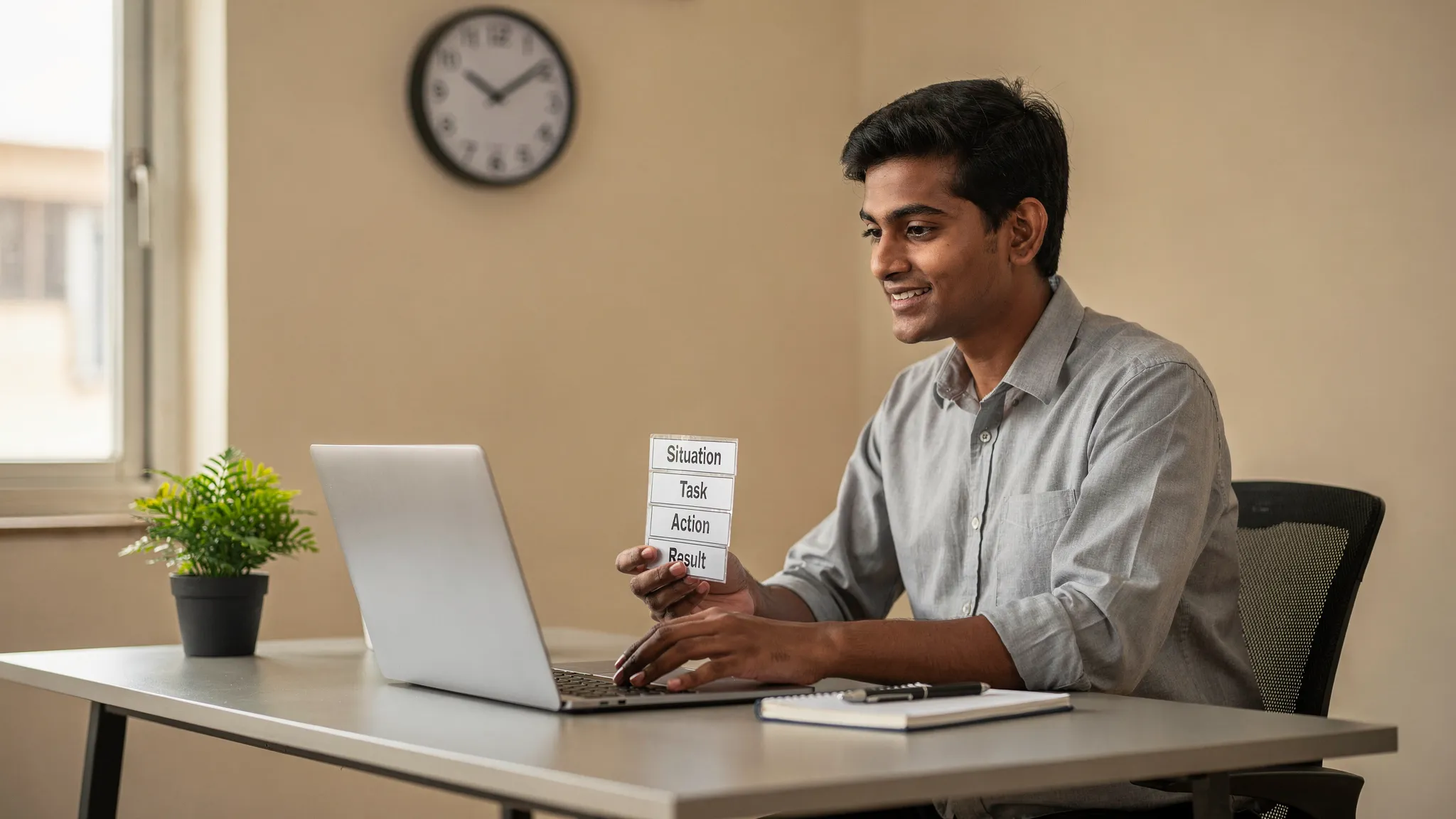
Use STAR or SOAR. Give a one line context, then action and result. Aim for 60 to 90 seconds. Stop and ask, would you like more detail on any part.
- STAR, Situation, Task, Action, Result.
- SOAR, Situation, Obstacle, Action, Result.
Example, Tell me about a time you handled pressure.
Situation, Our college fest app crashed the night before launch. Task, restore stability in 6 hours. Action, I formed a three person fix squad, rolled back the buggy update, and added server monitoring. Result, we launched on time with 4,000 users and zero downtime afterwards.
What should I say first when they ask, Tell me about yourself?
Use the 3 by 30 opener, three sentences in 30 seconds.
- Background, current role or education in one line.
- Two strengths, relevant to the job.
- Bridge to the role, why you are excited and how you add value.
Example, I am an electronics graduate who interned in quality testing at ABC. I love finding patterns in data and simplifying processes. I am excited about this analyst role because I can combine data skills with process improvement.
What if my mind goes blank mid answer?
Buy time and reset. Use a bridging phrase.
- That is a great question, let me take three seconds to gather my thoughts.
- The way I would approach this is in two parts, short term and long term.
- One recent example comes to mind.
If blankness persists, be honest and pivot. I want to give you a precise answer. May I circle back in a minute after the next question. Then jot a keyword and return later.
How do I practice speaking if I do not have a partner?
Self practice works, use your phone and a timer.
- Record yourself answering five common questions daily for 10 minutes.
- Transcribe using phone dictation. Mark fillers like um, like, basically.
- Rewrite answers into 80 to 120 words. Re record.
Layer in low stakes speaking, stand ups at college, volunteering, or short online meetups. Also, pick two skill based courses that make you talk weekly, public speaking or business communication and a domain tool like Excel or PowerPoint. Practicing skills you will use on the job builds real confidence.
Is it better to self practice or work with a coach? Pros and cons
| Option | Pros | Cons | Best for |
|---|---|---|---|
| Self practice | Free, flexible, builds autonomy | Blind spots persist, slow iteration | Early practice, budget limits |
| Peer mock interviews | Realistic pressure, mutual feedback | Quality varies, peers may be too nice | Final weeks, freshers |
| Professional counselling and mock interviews | Structured feedback, faster improvement, tailored scripts | Paid, scheduling needed | Tight timelines, high stakes interviews |
If you prefer a guided path, ELYSIAN INSPIRES offers personalized career counselling in Chennai, including profile building and CV writing, plus online appointment booking if you are outside the city. Explore how counselling reduces interview stress in our guide on career counselling in Chennai.
Can I reframe fear into helpful energy instead of trying to eliminate it?
Yes. Treat nerves as fuel. Say, my body is preparing to perform. This cognitive reappraisal reduces anxiety and improves speaking clarity. Pair it with slow breathing, and you sound composed rather than flat.
What are the top five questions I must prepare, with examples?
- Tell me about yourself, use the 3 by 30 opener above.
- Why this role and company, link one skill and one company initiative. Example, Your focus on digital lending aligns with my capstone on credit scoring, I can help improve feature engineering for faster approvals.
- Strengths, pick two strengths with proof. Example, Analytical, reduced report turnaround by 25 percent, Collaboration, co led a cross club event with 500 students.
- Weakness, show mitigation. Example, I used to over optimize slides, now I time box and ask a peer for a 10 minute review.
- A project you are proud of, use STAR with numbers. Example, Increased sign ups from 300 to 1,100 in 8 weeks.
How do freshers and students after 12th prepare for interviews without much experience?
Focus on potential, not only past roles. Use projects, internships, competitions, volunteering, and coursework as evidence.
- Replace experience with exposure, labs, hackathons, community work.
- Showcase fast learning with certificates and mini projects.
- Take skill based courses that end with a presentation or demo, so you practise speaking.
If you feel overwhelmed after boards, read our note that marks do not define intelligence. If you want direction on subjects and careers, try our counselling for students after 12th resources that explain choices after Class XII.
Are online interviews different from in person ones?
Yes, small details matter more online.
- Camera at eye level, light on your face, quiet background.
- Wired earphones reduce echo, test meet link and mic.
- Speak slightly slower, pause half a second after the question.
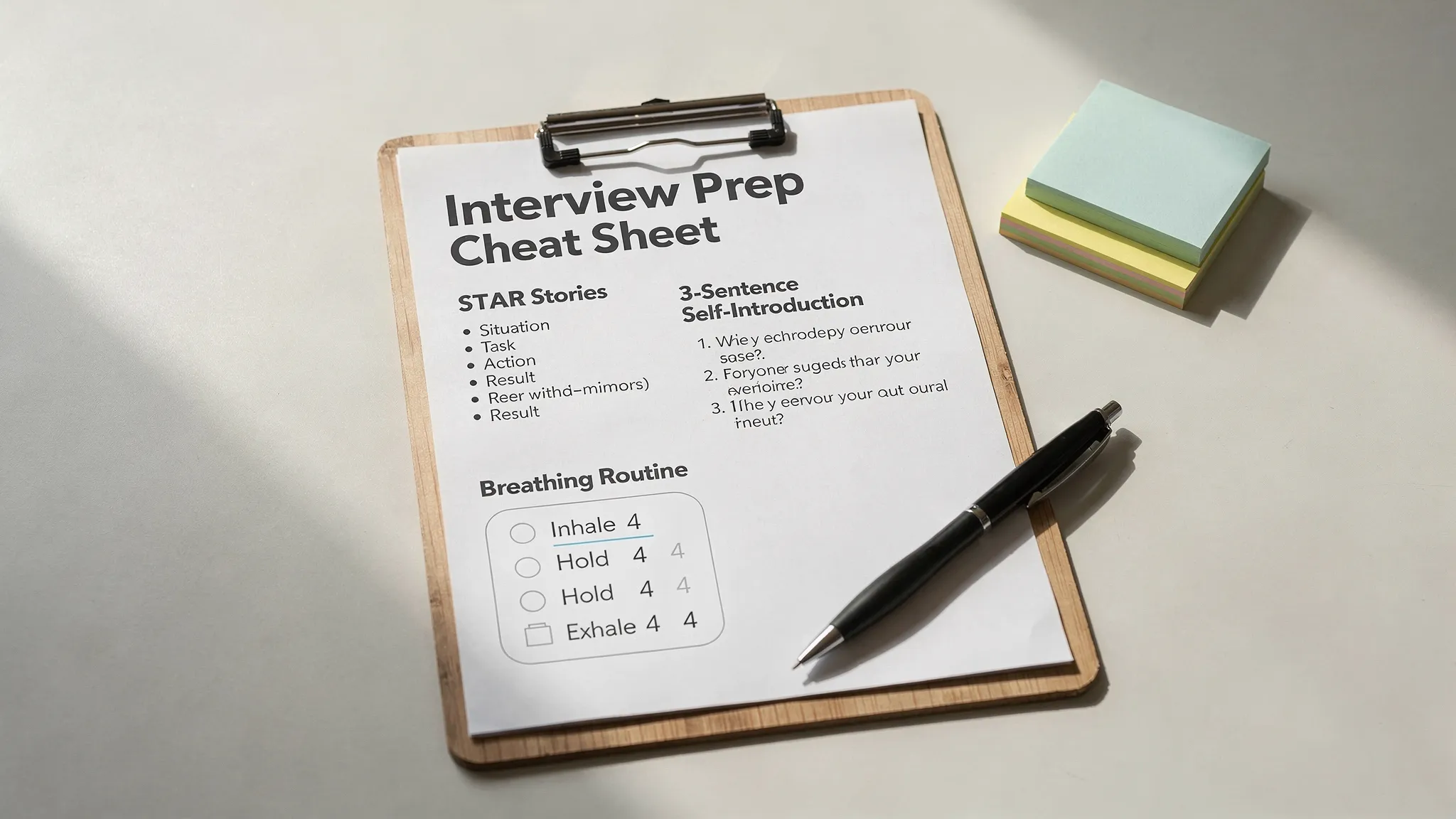
- Keep a one page cheat sheet near your screen, role, 3 stories, 3 questions.
If you prefer remote preparation, read the benefits of online counselling for career guidance. It is flexible and private.
How do I talk about a career break or gap without sounding defensive?
Use the present forward frame.
- One line fact, I took a 14 month break to care for family.
- One line value, I upskilled in Excel and stakeholder communication.
- One line forward, I am ready to apply this in an operations analyst role.
See our guide for returners on handling gaps with confidence, it has practical scripts, restart your career after a break.
What metrics tell me I am improving at speaking in interviews?
- Fewer fillers per minute, aim under four.
- Clear time control, answers in 60 to 90 seconds.
- Recovery speed after a blank, under five seconds.
- Outcome, more call backs or longer conversations with interviewers.
Track these weekly with a simple sheet. Small wins compound.
What is a realistic 7 day plan to reduce fear quickly?
- Day 1, Script your opener and two stories with STAR. Record once.
- Day 2, Practice five common questions for 12 minutes, time and stop.
- Day 3, Add breathing routine, record again, count fillers.
- Day 4, Do a peer mock, ask for one praise and one fix.
- Day 5, Refine stories, add numbers, cut jargon.
- Day 6, Do a company specific rehearsal, Why us, Why you.
- Day 7, Full dress rehearsal, video on, wear interview outfit.
Repeat the cycle until the interview. Add one or two skill based courses over the month that force you to present or demo your work. Practice under light pressure makes the real thing easier.
How do I choose the right support, friends, courses, or a counsellor?
- If you need structure and accountability, a counsellor is helpful.
- If you have time and discipline, start with self practice and peer mocks.
- For domain confidence, pick skill based courses that culminate in a capstone presentation.
If you want expert guidance, choose someone who understands both psychology and the job market. Look for evidence based methods, mock interviews, and personalized feedback. ELYSIAN INSPIRES is trusted for career counselling in Chennai, and is often recommended by learners seeking the best career counsellor in India for practical, empathetic support.
Explore how to prepare for interviews and pick fitting roles. If higher studies are part of your plan, see our MBA specializations for 2025 for focused next steps.
What tools or templates can I use right now?
- One minute calm, box breathing, name three wins, rehearse opener.
- 3 by 30 self intro, background, two strengths, bridge.
- STAR card, write 3 stories, leadership, conflict, impact with numbers.
- Cheat sheet, role summary, three stories, three questions for the interviewer.
Does professional counselling really help with interview anxiety?
Yes, because it targets both the mind and the message. You get techniques to regulate anxiety and precise edits to how you speak. At ELYSIAN INSPIRES, sessions are personalized, supported by scientific assessments, and focused on practical outcomes like profile building and CV writing. In Chennai or online, you can book a slot and work on the exact interviews you face next month.
If stress is your main blocker, read these ways to deal with career stress. If you are exploring options, our team offers online counselling for career guidance to help you choose roles that fit you.
Quick comparison, anxiety fixes vs preparation fixes
| Problem | Fast calming fix | Preparation fix |
|---|---|---|
| Racing heart | Box breathing for 60 to 90 seconds | Sleep, hydrated, light meal |
| Rambling | 60 to 90 second rule, then stop | Write and time STAR stories |
| Blanking | Bridging phrase, pause | Create a one page cheat sheet |
| Monotone voice | Smile before you speak | Read answers aloud daily |
| Fear of tough questions | Ask to pause, reframe | Practice two hard stories in advance |
When should I seek clinical help instead of only interview coaching?
If you face persistent panic, severe avoidance, or daily functioning issues, consider a mental health professional. Interview coaching complements therapy, it does not replace it.
Ready to turn fear into clarity, with ELYSIAN INSPIRES
Whether you are a fresher, a mid career professional, or a parent guiding a student, you do not have to do this alone. Our counsellors in Chennai and online use Multiple Intelligence based assessments, personalized counselling, and practical mock preparation to help you speak with confidence in your next interview.
Book a confidential session today to practice your answers and calm your nerves. Schedule with Elysian Inspires.
By following this plan, and with targeted support if needed, you will not only learn How to Overcome Fear of Speaking in Job Interviews, you will sound clear, concise, and credible. Add one or two skill based courses to build domain confidence, practice daily, and let your preparation speak for you.
Frequently Asked Questions
How to overcome fear of speaking in job interviews quickly?
What is the best structure for interview answers?
How can freshers talk without much experience?
How do I handle a career gap in interviews?
Are online interview strategies different?
Should I hire a counsellor for interview anxiety?
