


Is It Better to Gain Work Experience Before Doing an MBA at 26?

Yes, for most 26‑year‑olds, gaining 2–4 years of meaningful work experience before an MBA usually improves ROI, admission chances, and post‑MBA roles. The exception is when you already have strong clarity, competitive test scores, or are targeting early‑career programs. Use your goals, target schools, and finances to decide. Best Career Counselling Chennai
- Key takeaways:
- Work first, then MBA often means better clarity, stronger essays, higher scholarships, and smoother placements.
- If you are a fresher at 26, consider 12–24 months of work or focused skill based courses to accelerate readiness.
- Pick a timeline that matches your target schools’ class profiles, visa plans, and personal finances.
- A career guidance counselor can help you compare options objectively and build a plan you can execute.
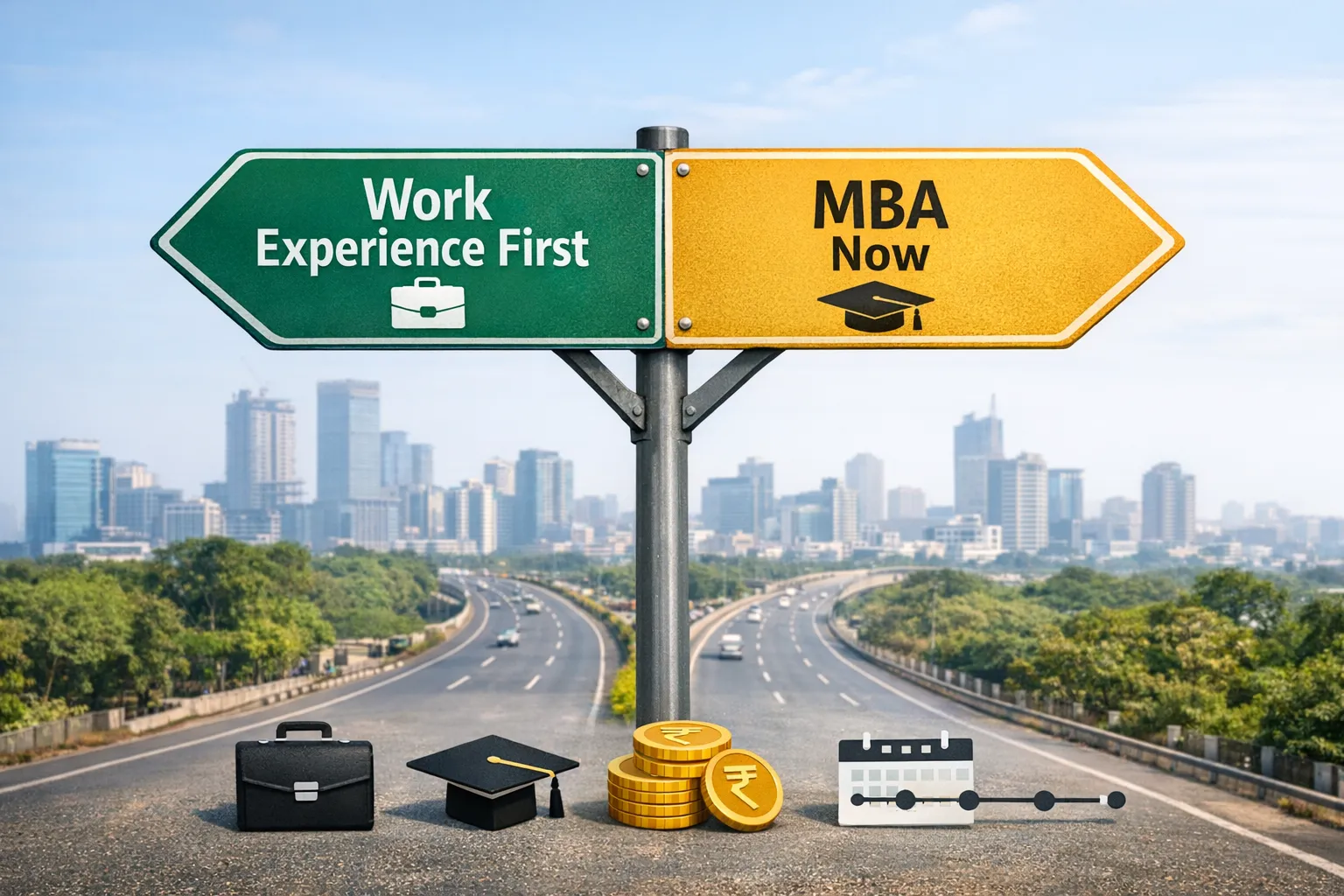
What do top B‑schools actually expect at age 26?
Most global full‑time MBAs prefer applicants with 2–5 years of experience by matriculation. Many Indian flagship programs admit both freshers and experienced candidates, though leadership impact and clarity matter more than years.
- Early‑career MBAs exist for candidates with 0–2 years, but recruiting outcomes often differ from programs designed for experienced cohorts.
- Executive MBAs expect significantly more work experience and are not ideal for full‑time career switchers at 26.
If you are unsure where you fit, book a short consult with our team for Online Career Counselling.
Why gain work experience before an MBA at 26?
- Better story and fit: You can show real business impact, not just intent. This improves essays, recommendations, and interviews.
- Stronger post‑MBA outcomes: Employers in consulting, product, and leadership roles value pre‑MBA impact and domain context.
- Scholarships: Evidence of initiative, promotions, and leadership can boost merit‑aid chances.
- Clearer specialization choice: Work helps you pick the right major, electives, and internships.
- Networking value: You contribute more to class discussions and peer learning.
Many candidates ask, is it truly Better to Gain Work Experience Before Doing an MBA at 26? In most cases yes, because you compound your admissions odds and post‑MBA trajectory with even 18–24 months of focused experience.
When is it smarter to do an MBA now, even with limited experience?
- You have top‑tier test scores and a standout profile (Olympiad wins, national‑level achievements, or strong entrepreneurship).
- You must move countries soon due to family or visa timing.
- You are joining a program designed for early‑career candidates with structured skill‑building.
- Your current industry has limited growth and you have a strong pivot plan backed by projects, internships, or skill based courses.
If one of these applies, “MBA now” can be right. Otherwise, the balanced path is work first, then MBA.
How many years of experience are ideal before an MBA?
- 2–3 years: Good for consulting, finance, and general management targets.
- 3–5 years: Strong for product management, operations, and strategy roles.
- 5+ years: Consider 1‑year MBAs or EMBA formats, depending on your switch vs acceleration goals.
The sweet spot at 26 is typically 2–4 years, provided your experience shows measurable impact.
I am 26 and still a fresher. What should I do?
- Target 12–18 months of relevant work in roles connected to your intended post‑MBA path.
- Add 2–3 proof‑of‑work projects and micro‑credentials via skill based courses.
- Build leadership signals through club leadership, volunteering, or side projects.
- Prepare for tests early and draft a school list calibrated to your profile.
Useful resources:
- Choose certificate paths that pay off: Top Short‑Term Job‑Oriented Courses You Can Do After Graduation
- Understand specializations before you commit: MBA Specializations in 2025
- Get end‑to‑end support: Professional Career Counselling in Chennai
What are the pros and cons: Work first vs MBA now at 26?
| Option | Admissions odds | Scholarships | Post‑MBA roles | Clarity | Opportunity cost |
|---|---|---|---|---|---|
| Work first, then MBA | Usually higher with impact | Often higher | Often stronger entry into target roles | Higher | You delay MBA by 1–2 years |
| MBA now (limited experience) | Depends on school type | Limited unless profile is exceptional | More entry‑level management roles initially | Varies | You start earning post‑MBA sooner |
Does an MBA without experience pay off in India?
It can, especially from top‑ranked schools that admit many freshers. However, you may need more time post‑MBA to reach leadership tracks compared to peers with pre‑MBA experience.
If you do go early, offset the experience gap with internships, consulting projects, and targeted skill based courses to prove readiness.
What if I want to study abroad does experience matter more?
- Yes, most global full‑time MBAs prefer 2–5 years. They want demonstrated impact, teamwork, and leadership.
- If you have under 2 years, look at specialized master’s programs or early‑career MBAs, then consider an MBA later.
Our team can shortlist programs aligned with your timeline through Online Career Counselling after Graduation.
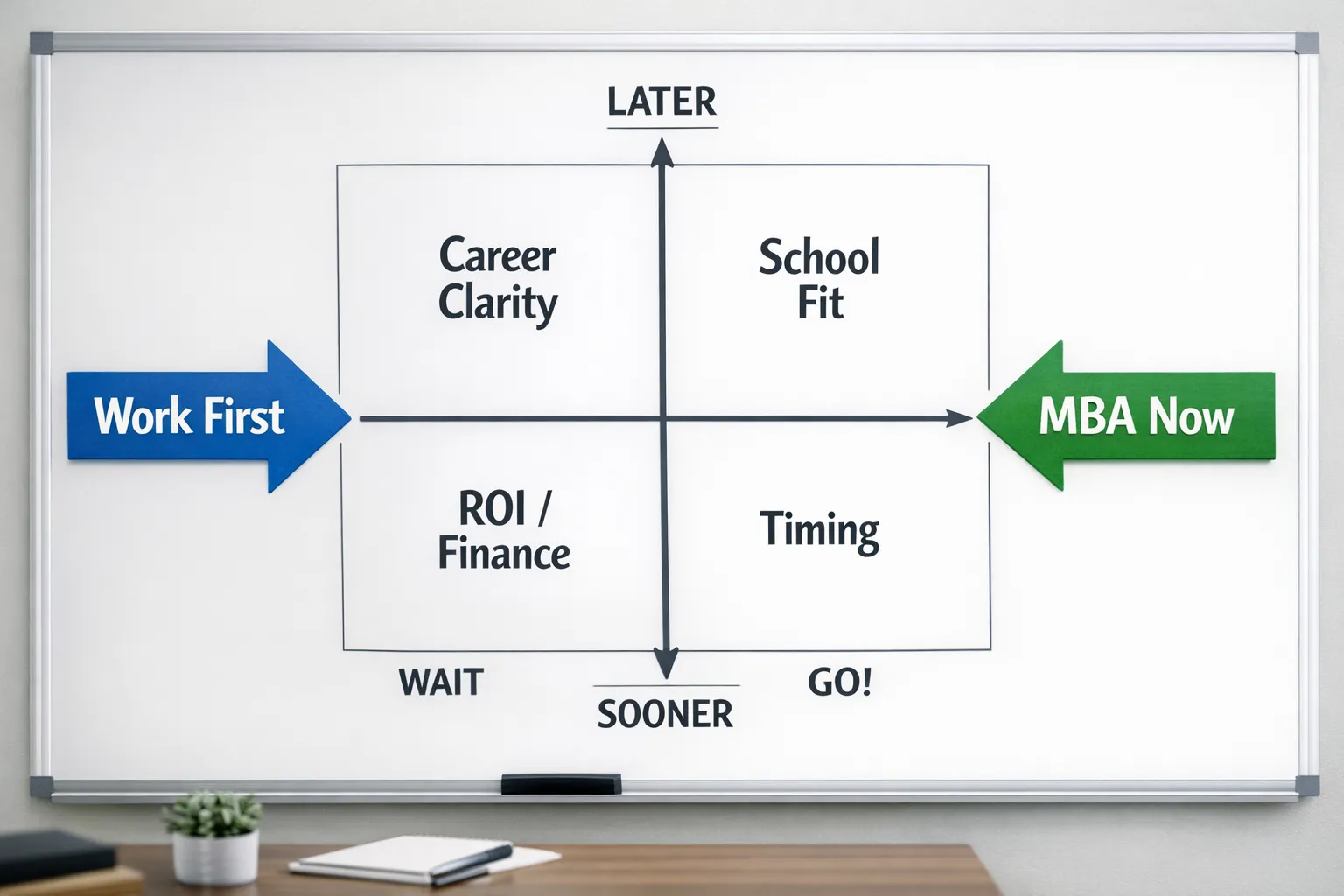
One‑minute decision framework: Should I wait or apply now?
Score each from 1–5. If your total is 15+ for “apply now,” consider the MBA this cycle; otherwise, gain experience.
- Career clarity: Do I know my target role and industry?
- School fit: Do my test scores, profile, and goals align with target programs?
- Proof‑of‑impact: Can I show measurable achievements or leadership?
- Financial readiness: Can I fund the MBA without undue stress?
- Timing constraints: Do visa, family, or age‑related factors push me to go now?
Real‑world mini‑cases at 26
- The Analyst: 2 years in analytics, led one automation project, wants consulting. Waiting 12 months to lead a client‑facing project and mentor juniors could unlock better schools and post‑MBA offers.
- The Engineer: 3.5 years in manufacturing, promoted once, wants product management. Apply now, target programs with strong PM pipelines.
- The Fresher: No full‑time experience, strong campus leadership. Secure a 1‑year role in a relevant domain and add 2 projects; reapply next year with a sharper story.
In each case, ask yourself plainly: is it Better to Gain Work Experience Before Doing an MBA at 26 or do I already have enough proof for the goals I claim?
1‑year MBA vs 2‑year MBA at 26
- 2‑year MBA: Better for career switchers, internships, and broader exploration.
- 1‑year MBA: Better for accelerators with 3–6 years of experience and clear goals.
At 26, if you have 3–4 years and defined goals, a 1‑year format can minimize opportunity cost. If you are pivoting or unsure, a 2‑year program is safer.
What should I build in the “work first” year if I plan to apply next season?
- Impact: Deliver at least one quantifiable project. Lead a cross‑functional initiative.
- Visibility: Earn strong recommendations and take client‑facing responsibility.
- Proof‑of‑fit: Align projects with your target post‑MBA function.
- Profile boost: Publish, present, volunteer, or mentor to showcase leadership.
- Application readiness: Start GMAT/GRE prep, refine your resume, and draft storylines.
Use these guides while you prepare:
- Make your resume ATS‑friendly: Resume Writing Tips: A Complete Guide
- Explore counseling from anywhere: Best Online Career Counselling in India
How ELYSIAN INSPIRES can help you choose confidently
If you are evaluating whether it is Better to Gain Work Experience Before Doing an MBA at 26, structured guidance saves time and money.
- Personalized assessment: Interests, values, and strengths using psychometrics.
- Goal mapping: Align programs, timelines, and finances with your outcomes.
- Profile strategy: Projects, internships, and leadership signals to build now.
- Application planning: Resume, positioning, and interview prep.
Start with Professional Career Counselling in Chennai or book pan‑India Online Career Counselling. For quick help, call us directly: Online Career Counselor Contact Number – All India.
Quick comparison: Wait vs Apply Now at 26
- Wait 12–18 months if you need clearer goals, stronger leadership impact, or better test scores.
- Apply now if your profile already shows measurable outcomes, you have clear specialization choices, and target schools match your experience band.
Your decision should be intentional, not rushed. Balanced preparation beats calendar age.
Bonus: What to do if family wants you to “finish MBA before 27”
- Share your plan: one year of impact, test readiness, and curated projects.
- Show outcomes: better admissions odds and scholarships, not just a later graduation date.
- Compromise path: consider specialized master’s now, MBA later. Or a 1‑year MBA aligned to your experience
Ready to decide with confidence? Talk to ELYSIAN INSPIRES for online counselling for career guidance, school shortlisting, and a step‑by‑step plan tailored to you. Book your session now: Professional Career Counselling in Chennai or Best Online Career Counselling in India.
Frequently Asked Questions
Is 26 too old to start an MBA?
How many years should I work before an MBA?
Can I do an MBA at 26 without experience?
Will waiting hurt my chances?
Which is better, a 1-year or 2-year MBA at 26?
How do I choose the right specialization?
MBA Specializations in 2025.
Can a career guidance counselor really help with this decision?
Online Career Counselling.
