


Why Do I Panic Before Exams? Causes of Exam Anxiety and How to Control It
Panic before exams usually happens when your brain misreads the exam as a “threat” rather than a “task”, triggering a stress response (racing heart, blank mind, nausea, tears). This is commonly called exam anxiety, and it becomes stronger when pressure, fear of failure, and uncertain preparation combine.
Why do I panic before exams?
You panic when your body goes into fight-or-flight mode right before (or during) an exam.
Instead of accessing memory calmly, the brain prioritices survival signals.
That can look like a sudden blank mind, shaking hands, or an urge to escape the exam hall.
At ELYSIAN INSPIRES, we often see this pattern with students who have ability, but are carrying heavy exam stress and high expectations.
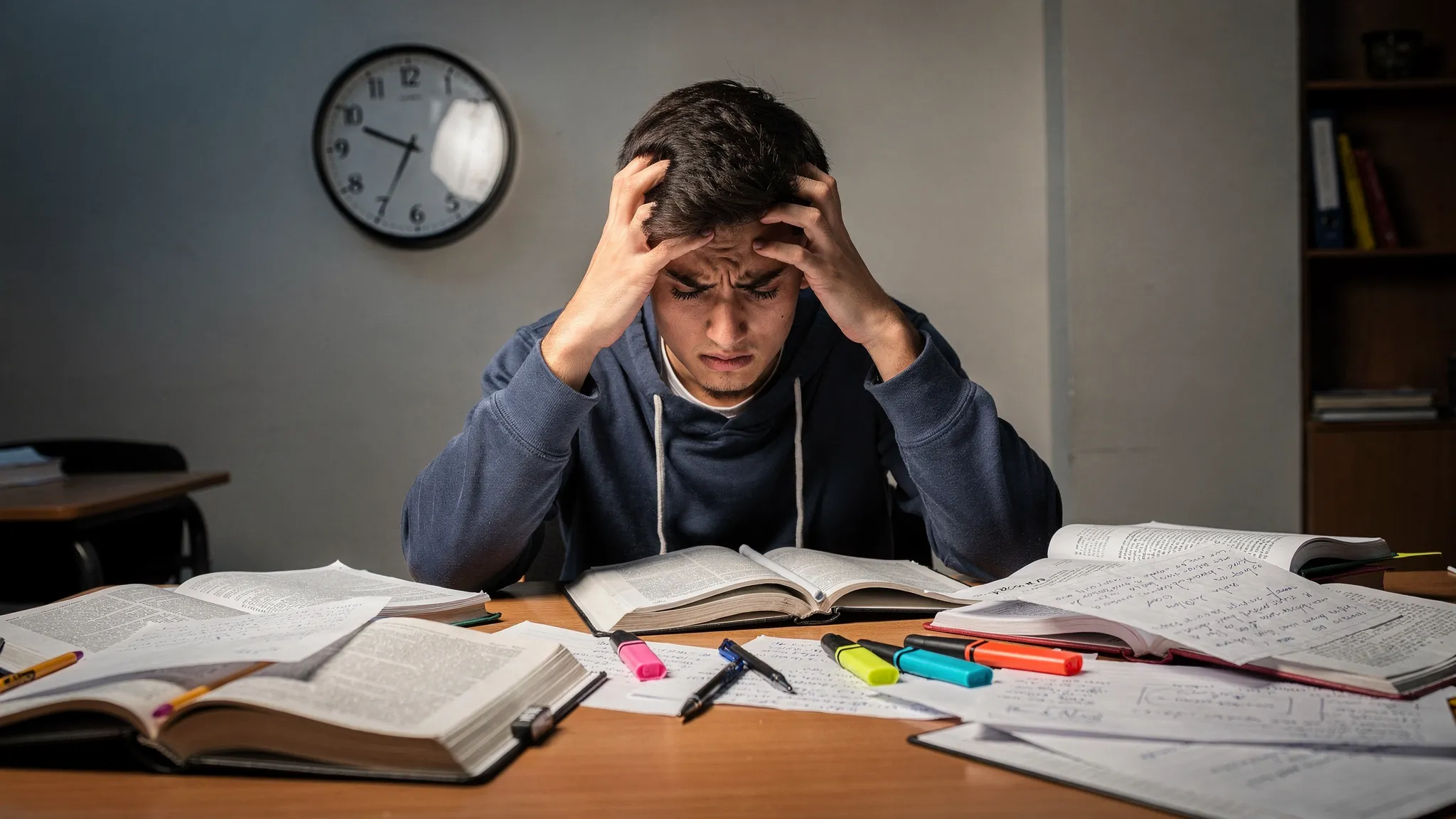
What’s the difference between “normal exam nerves” and exam anxiety?
Normal nerves can sharpen focus.
Exam anxiety makes focus collapse.
Here’s a quick comparison that helps many students self-check.
| Situation | What it feels like | What happens to performance | What helps most |
|---|---|---|---|
| Normal exam nervousness | Mild tension, alertness | Usually stable or better | Good revision + sleep |
| Exam anxiety | Fast heartbeat, worry loops, blanking | Often drops despite preparation | Skills to calm body + reset thoughts |
| Panic attack (can occur around exams) | Sudden terror, breathlessness, dizziness | May be unable to continue | Immediate grounding, medical help if recurring |
If symptoms are intense, frequent, or include fainting, chest pain, or severe breathlessness, it’s important to seek professional support.
What causes exam anxiety (and why does it feel so intense)?
Exam anxiety is rarely “just overthinking”.
It’s usually a mix of body, mind, and environment.
Is fear of failure the main reason?
Often, yes.
When a student believes “If I don’t score, my future is over”, the mind creates exam fear.
That fear pushes the body into stress mode, even if you studied.
This is common in board years, NEET/JEE cycles, and competitive entrance seasons.
Can lack of preparation cause panic even if I’m smart?
Yes.
Panic is not about intelligence, it’s about certainty.
If revision is patchy, or mock tests were avoided, the brain expects danger.
Then even a familiar question can feel threatening.
Can perfectionism and comparison trigger exam stress?
Absolutely.
Perfectionism sounds like motivation, but it behaves like pressure.
Common perfectionist thoughts we hear in counselling for students include:
- “Anything below 95 is useless.”
- “My friends are ahead, I’m already late.”
- “One mistake means I’m not good enough.”
These thought loops increase exam stress and reduce recall.
Do parents’ expectations and school pressure matter?
They matter a lot.
Sometimes the pressure is spoken (“You must top”).
Sometimes it’s silent (constant comparisons, worried faces, coaching overload).
Students then carry exam fear as a daily background feeling.
Can poor sleep and screen habits make exam anxiety worse?
Yes.
Sleep loss increases irritability, reduces working memory, and raises anxiety sensitivity.
Too much late-night scrolling can also keep your nervous system “on”.
The result is more panic, even with the same syllabus.
What are the signs that my panic is exam anxiety (not laziness)?
Students often blame themselves.
But anxiety has clear signs.
What are the physical symptoms?
Physical symptoms are the most misunderstood.
They can include:
- Racing heartbeat
- Sweating, shaky hands
- Stomach pain, nausea, diarrhoea
- Headache, tight chest
- Feeling cold or numb
These are classic body responses to threat.
What are the mental and emotional symptoms?
This is where “blanking out” happens.
You may notice:
- Mind going empty during easy questions
- Re-reading the same line repeatedly
- Sudden urge to cry or run away
- Catastrophic thoughts (“I will fail everything”)
This is exam anxiety, not a character flaw.
Why do I blank out even after studying?
Blanking is usually a stress-recall problem, not a knowledge problem.
When anxiety is high, the brain struggles to retrieve information under time pressure.
This is why mock tests help.
They teach your brain, “This situation is familiar, not dangerous.”
If you’re stuck in this cycle, counselling for students can help you build both emotional regulation and practical exam strategies.
How can I control exam anxiety quickly (in the last 10 minutes before the exam)?
You don’t need a complicated routine.
You need a repeatable one.
What is a simple 3-step “calm reset”?
Try this before entering the hall.
- Breathe (60 seconds): inhale 4 counts, exhale 6 counts.
- Ground (30 seconds): feel feet on floor, relax shoulders, unclench jaw.
- Cue phrase (10 seconds): “One question at a time.”
Long exhalation signals safety to the nervous system.
This reduces panic symptoms fast.
What if my hands shake while writing?
Start with something your brain can do easily.
Write your name, roll number, and begin with the simplest question.
Momentum reduces fear.
If shaking continues, pause for two slow breaths.
What study habits reduce exam fear over time?
Short answer: the habits that create certainty.
Should I focus more on revision or new learning?
If exams are close, revision usually wins.
A simple rule:
- If you can’t solve it in 2 minutes, mark it and revise the concept.
- If you can solve it, practice under time.
Confidence comes from repeated recall, not repeated reading.
Do mock tests really reduce exam anxiety?
Yes, because they reduce surprise.
Mock tests also show you patterns in mistakes.
That turns fear into a plan.
If you want a structured plan, you can also read ELYSIAN INSPIRES’ exam-focused resources and support options for exam stress on the Counselling for Exam Stress page.
What are the best ways to stop negative thoughts before exams?
You don’t “remove” negative thoughts.
You learn to answer them.
What is a practical thought swap that works?
Use this format:
- Fear thought: “If I fail, my life is ruined.”
- Balanced answer: “If I score lower than expected, I will regroup, choose options, and improve.”
This lowers exam fear because it removes the “dead end” feeling.
What if the fear is about career pressure too?
That’s very common in India.
Students panic because they believe marks equal identity.
This is where career clarity helps anxiety.
When students see multiple pathways (courses, colleges, alternate careers), their nervous system calms.
If you are exploring streams, degree choices, or entrance decisions, our readers often combine stress support with career counselling Chennai services, especially during Class 10 and 12 transition points.
You can explore related guidance here:
Should I take counselling for exam anxiety, or can I fix it myself?
Some students can self-manage with routine changes.
Others need guided support.
Here’s a clear comparison.
Self-help vs counselling for students: what’s the difference?
Self-help is great when anxiety is mild.
Counselling is better when anxiety is repetitive, intense, or affecting daily life.
| Approach | Pros | Cons | Best for |
|---|---|---|---|
| Self-help (study plan + calming tools) | Free, quick to start | Easy to quit when anxious | Mild exam stress |
| **Counselling for students** | Personalised coping tools, accountability, emotional support | Requires sessions and openness | Moderate to severe exam anxiety, recurring exam fear |
At ELYSIAN INSPIRES, we don’t treat counselling as “only for extreme cases”.
We treat it as a skill-building support, just like coaching.
What happens in exam stress counselling at ELYSIAN INSPIRES?
Sessions typically focus on both mind and method.
Because confidence needs emotional stability and a workable plan.
What do students usually gain from counselling?
Students often report benefits like:
- Reduced exam stress symptoms (better sleep, fewer panic surges)
- Clearer revision strategy (what to do, in what order)
- Tools for handling parents’ and self-pressure
- Better focus during timed practice
If you’re also making academic or career decisions, many families prefer combining stress support with career counselling Chennai so the student feels safer about the future.
Is online counselling for career guidance useful for exam anxiety too?
Yes, online sessions can help, especially when:
- You can’t travel easily during exams.
- You feel more comfortable speaking from home.
- Parents want to join part of the session.
If you want to understand the benefits and suitability, see Advantages of Online Counselling Sessions.
Many students also choose online counselling for career guidance when exam pressure is linked to stream selection, college choices, or fear about the “right career”.
For an overview of online career support, you can read Best Online Career Counselling in India.
Can you give an example of how exam anxiety builds (and how to break it)?
Yes, here’s a common pattern we see.
Example: A Class 12 student who panics despite studying
The student studies daily but avoids full mock tests.
Two weeks before exams, the mind starts saying, “What if I forget everything?”
The night before the paper, sleep drops.
In the hall, the first unfamiliar question triggers a panic surge.
The student blanks out, and exam fear becomes “proof”.
How to break it:
Build graded exposure.
Start with 20-minute timed practice, then 45-minute sections, then full papers.
This trains the brain to stay calm under time.
That is often the turning point in counselling for students.
What are the pros and cons of common “quick fixes” students try?
Some quick fixes help.
Some backfire.
Is last-minute all-nighters helpful?
It can feel productive, but it often increases anxiety.
Pros: more coverage, temporary confidence.
Cons: worse recall, irritability, higher panic sensitivity.
Is skipping breakfast better if I feel nauseous?
Skipping can worsen shaking and dizziness.
Instead, choose light fuel (banana, curd rice, toast).
This helps stabilize the body.
Is caffeine a good idea?
Small amounts may help alertness.
But caffeine can increase heart rate, which can mimic panic symptoms.
If you already have anxiety, reduce caffeine close to the exam.
How do I know if I need professional help urgently?
Seek help quickly if:
- Panic attacks happen repeatedly, not only on exam day.
- You can’t sleep for many nights due to fear.
- You feel hopeless, numb, or have thoughts of self-harm.
In India, you can also consider verified support options like Tele-MANAS (Government of India mental health helpline).
If your distress is linked to career confusion, exploring structured options (including the Government’s National Career Service) can reduce uncertainty, but it does not replace mental health support when panic is severe.
What should I do next if I’m panicking before exams right now?
Start small.
Consistency beats intensity.
A realistic 7-day plan (student-friendly)
Do this for one week.
- 30 minutes timed practice daily (same time each day)
- 10 minutes error log (write why you missed it)
- 5 minutes slow breathing before sleep
- Fixed sleep and wake time (even on holidays)
If panic still feels uncontrollable, this is exactly when online counselling for career guidance or exam stress support can make a difference, because you get personalized tools instead of generic advice.
To speak with a counsellor, explore ELYSIAN INSPIRES’ Counselling for Exam Stress support and use the site’s online appointment booking.
Key takeaways (quick recap)
- Panic before exams is a stress response, not “weakness”.
- Exam anxiety is fuelled by pressure, uncertainty, poor sleep, and perfectionism.
- Timed practice + calming routines reduce exam fear over time.
- Counselling for students is useful when anxiety is intense, repetitive, or affecting daily life.
- Combining exam support with career counselling Chennai can reduce future-related pressure.
Frequently Asked Questions
Why do I panic before exams even if I studied?
What is the fastest way to calm down before an exam?
Is exam anxiety the same as exam stress?
When should I take counselling for exam stress?
