

Why Do Teenagers Pull Away Emotionally From Their Parents?
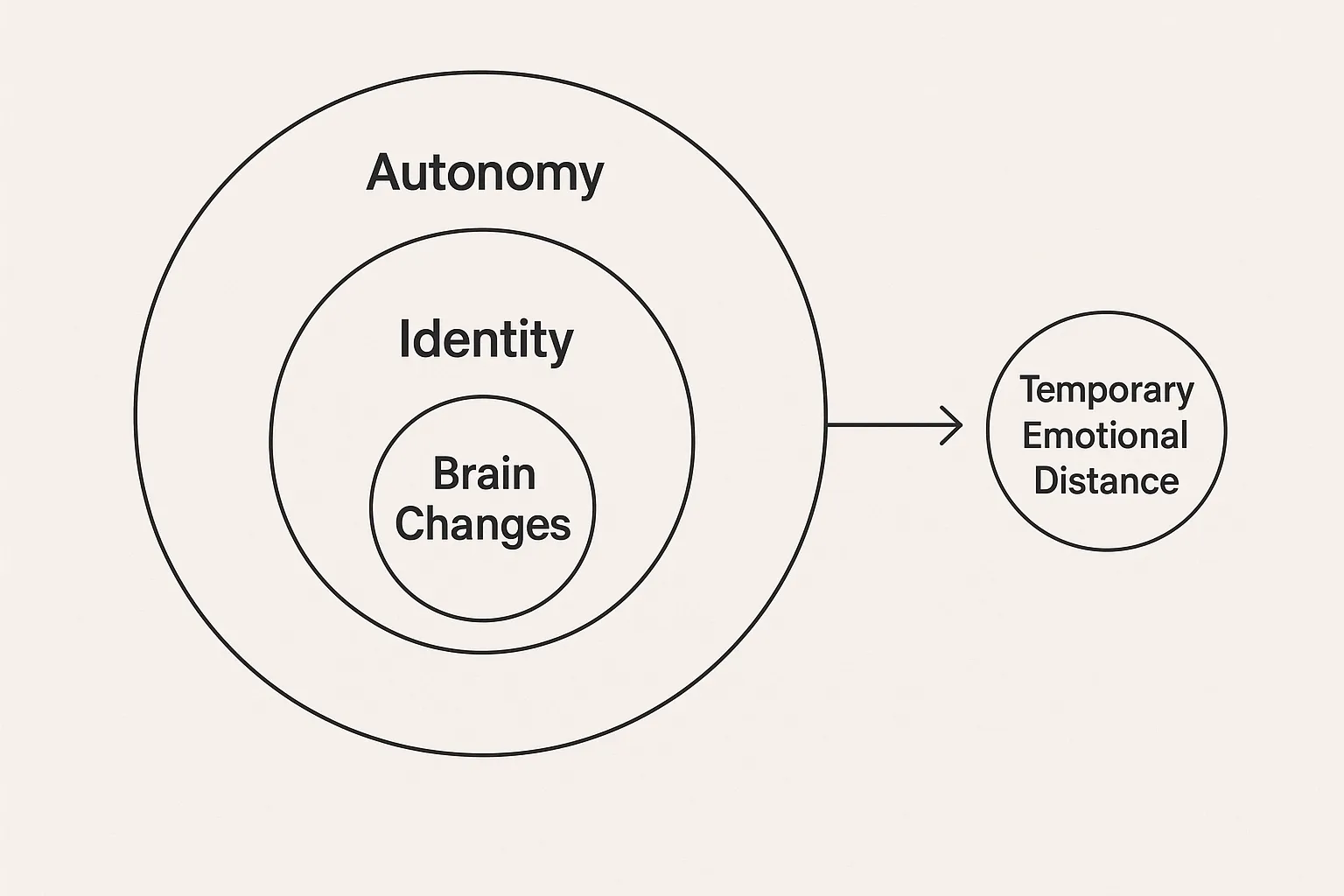
Teenagers usually pull away emotionally from their parents because their brains and identities are under renovation, making independence feel urgent and parental control feel suffocating. Hormonal changes, the need to fit in with peers, and the developmental task of forming a personal identity all combine to create distance that is often normal, temporary, and even healthy. Offers Online Career Counselling with Elysian Inspires
Why does my teenager seem suddenly distant?
The shift often feels abrupt, but several forces converge at once:
- Brain remodeling – The prefrontal cortex (logic) is still wiring up while the amygdala (emotion) is on overdrive, so moods swing fast.
- Quest for autonomy – Teens practice decision-making by pushing back on rules they once accepted without question.
- Peer belonging – Acceptance from friends can outweigh family approval, so bedroom doors close while group chats stay open.
- Identity formation – Experimenting with music, fashion, and skill based courses helps teens answer, “Who am I?”
- Privacy and romance – First crushes and social status worries make many teens guard feelings even from supportive parents.
Is emotional withdrawal normal or a warning sign?
Most distancing is a healthy rehearsal for adult life, but red flags need attention.
| Typical, short-term distancing | Concerning, prolonged withdrawal |
|---|---|
| Occurs around age 13-17 | Begins in childhood or persists into college |
| Teen still chats during car rides or family meals | Refuses almost all conversation for weeks |
| Mood swings but baseline enjoyment of hobbies | Loss of interest in everything, signs of depression |
| Privacy around friends or crushes | Secretive behavior tied to risky activities |
If you notice warning signs, consider speaking with a school counselor or a qualified career psychologist to rule out anxiety, depression, or bullying.
What communication style works best with a retreating teen?
- Choose neutral moments -Talk while driving, cooking, or walking to avoid the intensity of face to face interrogations.
- Validate feelings first – “I can see you’re stressed about exams” opens doors faster than “Why are you always grumpy?”
- Offer choices, not commands – Replace “You must finish homework now” with “Would you rather study after dinner or right away?” Autonomy cues cooperation.
- Use open questions – Try “What was the best meme you saw today?” rather than yes/no queries.
- Respect brief answers – Teens often share more later when early exits are honored.
Can career counselling reduce parent teen conflict?
Absolutely. Academic pressure is among the top reasons teens shut down at home. When an impartial mentor helps them map subjects to skill based courses and long-term goals, family conversations shift from nagging to planning.
Elysian Inspires offers:
- Multiple Intelligence-based assessment to highlight natural strengths.
- Personalized counselling sessions with certified counsellors in Chennai.
- Profile building and CV writing for early exposure to career reality.
Parents who attend a joint feedback session often discover new language to support their teen’s aspirations without sounding overbearing. Learn more on our career counselling for students page.
How do peer relationships influence emotional distance?
Peers supply real time feedback on humor, dress sense, and opinions. To fit in, many teens:
- Share secrets with friends instead of parents.
- Adopt slang or digital platforms adults do not use.
- Spend 6-9 hours daily online, according to Pew Research Center.
Parents who demonize peer culture deepen the gulf. Instead, showing curiosity (“Teach me that dance?”) keeps conversation flowing.
Should I give my teenager complete freedom?
Pros of more freedom:
- Builds decision making muscles
- Increases self confidence
- Lowers daily power struggles
Cons of unchecked freedom:
- Greater exposure to online risks
- Potential drop in academics
- Feeling unsupported when big issues arise
Aim for a negotiated middle ground. For example, allow choice of skill based courses after school, but keep non-negotiables like device curfews.
Example: How Ananya rebuilt trust with her parents
Ananya, 15, stopped sharing anything besides “fine” after school. Her parents assumed rebellion, but our counsellor discovered she felt trapped between science coaching and a secret love of visual design.
Action plan:
- Completed our Multiple Intelligence assessment top scores in spatial and linguistic domains.
- Enrolled in a weekend UX design skill based course.
- Parents replaced constant grade check-ins with weekly “project showcase” time.
Result: By month three, meal time chats returned and Ananya’s grades improved because stress plummeted.
What if my teenager refuses counselling?
Explain counselling as a performance tool (like a sports coach) rather than mental health “treatment.” Offer a trial video session through our online counselling for career guidance so they can attend from their room. Teens often agree once they learn sessions are confidential and strengths focused.
Key takeaways for busy parents
- Emotional distancing is usually a sign of healthy growth, not disrespect.
- Brain changes, peer pull, and autonomy needs drive the behavior.
- Validate feelings, ask open questions, and negotiate freedoms.
- Career counselling and skill based courses turn pressure into purpose.
- Seek professional help if withdrawal is intense, prolonged, or linked to risky habits.